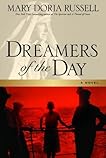
A while back I finished a book called Dreamers of the Day: A Novel by Mary Doria Russell as part of our local library summer reading/discussion program. The story itself centers on a schoolteacher from Ohio who loses her entire family to WWI or the great influenza epidemic, along with almost dying herself. Due to those events, she comes into a small inheritance and is able to travel, to Egypt. The bulk of the novel focuses on her experiences where she encounters and interacts with T.E. Lawrence (better known as Lawrence of Arabia), Winston Churchill, and Gertrude Bell before and during the infamous Cairo Conference of 1921.
Naturally, at least I thought it was a natural progression, the discussion trended towards current politics in the Middle East, both domestically for those nations, and the U.S.'s foreign policy and involvement in the region. And as with any group, there was disagreement over the history, or rather, the meaning of the history, the causes of the issues, what were issues and what were not, and general policy towards the region on behalf of the U.S. But most importantly to me, there was no shouting, no insulting and ad hominem attacks on others, no calling others unpatriotic or stupid for having ideas disagreeing with your own. The discussion was at all times respectful, and I truly believe very informative for everyone involved.
Last nigh t, a new series started at the library dealing with the 1960s, and the first lecture and discussion was based on the first half of Tom Brokaw's Book, "Boom." The first part of the book shares many personal stories of individuals who were involved in different facets and different positions of the various movements and events of the tumultuous decade. But because politics was so volatile then, and it seems to have gotten that way again right now, the discussion trended towards the similarities and differences in the political and social areas of the nation now compared to then. They were many differing viewpoints once again (particularly when it came to discussing the concept of mandatory national service), the tone was always respectful. Everyone displayed an interest in listening to others, and no one had to fear being yelled at our called a insulting name.
I bring this up because these experiences seem to be too rare. On the national scene, it seems anything proposed by someone with a (D) in front of their name is indoctrination, evil, or somehow on the way to socialism. (Digression - people really don't understand socialism, do they - I mean, in a country where there are very, very, very rich people, and very, very, very poor people, the idea that we are a step away from socialism is laughable). We have individuals who show up at town halls with guns (I get that its a right, but it shows a lack of respect). We have people drawing Hitler mustaches on our President, because somehow suggesting universal health care is akin to killing 12 million people and attempting to eradicate an entire race. Do these people really believe that these actions are comparable? (Another digression and something to think about - Medicare is essentially government run health insurance for those over 65; the VA Health System is essentially government run health care, the significant majority of all employees and doctors in the system are government employees. If one is against universal health care because it will be by the government, shouldn't they also be attempting to repeal these programs?).
Locally, we have had our share of non-civil discussion. The local representative in the House, Mark Souder, had a town hall meeting on health care. Seemed somewhat pointless considering he had stated beforehand that he would not vote in favor of health care reform, regardless of what changed in the proposed legislation. But people went, and there was once again mentions of socialism and government taking away our freedoms. This claims were not supported by references to the bill, or to even a news story, but were taken as fact. And as always, there is never a suggestion of what to do instead. Is the status quo in health care good? We even had the ubiquitous reference to "death panels," the lovely fiction created by Sarah Palin and Newt Gingrich in their attempts to scare people away from having rational discussions about the bill. I, of course, agree with Ms. Palin and Mr. Gingrich, I think death panels are a horrible idea. I think almost everyone would think so...which is why its nowhere to be found in the bill. But why let facts bother you when fear is such a more powerful political weapon.
Another neighboring town recently had two lengthy council meetings with public input about adding sexual orientation and gender identity to its non-discrimination ordinance. As with most social issues, it became highly controversial, with one local radio station promoting people from all over to come to the meeting to speak against the inclusion, even if they didn't live in the area affected by the proposed change. The discussion, however, rarely centered on the legality of such inclusion, or who it would affect and to what extent. Rather, fear was once again used. Claims that one would not be able to fire a child care worker because he or she was homosexual, because everyone knows all homosexuals are pedophiles. Fears of perverted men dressing up as women so they could enter a women's bathroom (a failure to understand the difference between cross dressing and having a diagnosed psychiatric condition); and not realizing that putting these terms into a non-discrimination ordinance in no way creates a defense to criminal action. I'm not stating that there is one right or one wrong answer to this particular question, but I do believe its disappointing when fear and ignorance tends to dominate the discussion rather than logical ideas and rational thought, along with respectful discussion.
I am in favor of health care reform, and in particular, universality and a public option. I had no problem with the change in the town's non-discrimination ordinance (I don't live there anyway). But I can respect people and their ideas who are on the other side of the fence. But I guess my respect is limited to those ideas based on reason, not fear. And its limited to tactics that are respectful, not akin to fear-mongering. After the health care debate the last several weeks, along with our local scene, I was very disenchanted with people, growing more cynical than usual. Remembering the book group's discussion several weeks ago about the Middle East, and in large part due to last night's discussion of the 60s and politics, gender, and race, I'm not so down. There's still a ways to go to get to the point where we can have respectful disagreeable discussions, but its nice to know that it can happen, and experience it every now and again.
Naturally, at least I thought it was a natural progression, the discussion trended towards current politics in the Middle East, both domestically for those nations, and the U.S.'s foreign policy and involvement in the region. And as with any group, there was disagreement over the history, or rather, the meaning of the history, the causes of the issues, what were issues and what were not, and general policy towards the region on behalf of the U.S. But most importantly to me, there was no shouting, no insulting and ad hominem attacks on others, no calling others unpatriotic or stupid for having ideas disagreeing with your own. The discussion was at all times respectful, and I truly believe very informative for everyone involved.
Last nigh
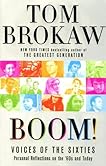 t, a new series started at the library dealing with the 1960s, and the first lecture and discussion was based on the first half of Tom Brokaw's Book, "Boom." The first part of the book shares many personal stories of individuals who were involved in different facets and different positions of the various movements and events of the tumultuous decade. But because politics was so volatile then, and it seems to have gotten that way again right now, the discussion trended towards the similarities and differences in the political and social areas of the nation now compared to then. They were many differing viewpoints once again (particularly when it came to discussing the concept of mandatory national service), the tone was always respectful. Everyone displayed an interest in listening to others, and no one had to fear being yelled at our called a insulting name.
I bring this up because these experiences seem to be too rare. On the national scene, it seems anything proposed by someone with a (D) in front of their name is indoctrination, evil, or somehow on the way to socialism. (Digression - people really don't understand socialism, do they - I mean, in a country where there are very, very, very rich people, and very, very, very poor people, the idea that we are a step away from socialism is laughable). We have individuals who show up at town halls with guns (I get that its a right, but it shows a lack of respect). We have people drawing Hitler mustaches on our President, because somehow suggesting universal health care is akin to killing 12 million people and attempting to eradicate an entire race. Do these people really believe that these actions are comparable? (Another digression and something to think about - Medicare is essentially government run health insurance for those over 65; the VA Health System is essentially government run health care, the significant majority of all employees and doctors in the system are government employees. If one is against universal health care because it will be by the government, shouldn't they also be attempting to repeal these programs?).
Locally, we have had our share of non-civil discussion. The local representative in the House, Mark Souder, had a town hall meeting on health care. Seemed somewhat pointless considering he had stated beforehand that he would not vote in favor of health care reform, regardless of what changed in the proposed legislation. But people went, and there was once again mentions of socialism and government taking away our freedoms. This claims were not supported by references to the bill, or to even a news story, but were taken as fact. And as always, there is never a suggestion of what to do instead. Is the status quo in health care good? We even had the ubiquitous reference to "death panels," the lovely fiction created by Sarah Palin and Newt Gingrich in their attempts to scare people away from having rational discussions about the bill. I, of course, agree with Ms. Palin and Mr. Gingrich, I think death panels are a horrible idea. I think almost everyone would think so...which is why its nowhere to be found in the bill. But why let facts bother you when fear is such a more powerful political weapon.
Another neighboring town recently had two lengthy council meetings with public input about adding sexual orientation and gender identity to its non-discrimination ordinance. As with most social issues, it became highly controversial, with one local radio station promoting people from all over to come to the meeting to speak against the inclusion, even if they didn't live in the area affected by the proposed change. The discussion, however, rarely centered on the legality of such inclusion, or who it would affect and to what extent. Rather, fear was once again used. Claims that one would not be able to fire a child care worker because he or she was homosexual, because everyone knows all homosexuals are pedophiles. Fears of perverted men dressing up as women so they could enter a women's bathroom (a failure to understand the difference between cross dressing and having a diagnosed psychiatric condition); and not realizing that putting these terms into a non-discrimination ordinance in no way creates a defense to criminal action. I'm not stating that there is one right or one wrong answer to this particular question, but I do believe its disappointing when fear and ignorance tends to dominate the discussion rather than logical ideas and rational thought, along with respectful discussion.
I am in favor of health care reform, and in particular, universality and a public option. I had no problem with the change in the town's non-discrimination ordinance (I don't live there anyway). But I can respect people and their ideas who are on the other side of the fence. But I guess my respect is limited to those ideas based on reason, not fear. And its limited to tactics that are respectful, not akin to fear-mongering. After the health care debate the last several weeks, along with our local scene, I was very disenchanted with people, growing more cynical than usual. Remembering the book group's discussion several weeks ago about the Middle East, and in large part due to last night's discussion of the 60s and politics, gender, and race, I'm not so down. There's still a ways to go to get to the point where we can have respectful disagreeable discussions, but its nice to know that it can happen, and experience it every now and again.


No comments:
Post a Comment