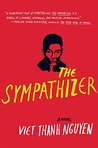
 The Sympathizer by Viet Thanh Nguyen
My rating: 5 of 5 stars
A confession regarding this book - I had never heard of it or seen anything about it until the announcement earlier this year that it was awarded the Pulitzer Prize for fiction. Yet, as books that tend to win such awards go, this was a profoundly excellent read.
The book is narrated by a man without a name, known only by occasional references as Captain, who is a mole or spy for the North Vietnamese during the end of and following the Vietnam War. The Captain is an aide to the General, the South Vietnamese leader of the Secret Police. Early on we know that the book is written as a confession by the Captain, to someone other than the General, a person known initially only as the Commandant. As the novel progresses, from the end of the Vietnam War and the takeover of Saigon by the communists of North Vietnam, to the Captain's, the General's, and others experiences as a refugee in Los Angeles, to a climactic conclusion back in Vietnam that has a thrillingly downhill pace to it, the reader is treated to amazing writing. Frequently throughout the book I found myself awed at the turn of the phrase the author was able to use in describing various events, people, and objects.
In addition to the wonderful language and pacing, the book, more than any book I've recently read, is so cunningly political and philosophical that one doesn't realize it until reflection; and then, upon reflection, wonders how you missed it (after all, its a book centered around the Vietnam War). There is the tension of political ideology, and how such impacts culture and identity - both personal and communal. But beyond that obvious theme, the book touches and uses symbolism to explore so many other concerns and ideas worthy of reflection - the existentialism of personal versus cultural identity; evil in the world, and how it manifests itself both in action and inaction; what bonds tie us, in family, in friendship, and in community; the impact of media representations of other cultures, for both good and bad; the psychological role in and results of interrogation by torture; and what does freedom and independence mean in certain cultural contexts.
One of the more intriguing aspects of the book is the de-personalization (for lack of better terminology) of the narrator. We never get his name. He is an agent for the North Vietnamese communists, but has worked and lived on the other side and with Americans for most of his adult life. He is everything to the novel (as its narrator and central focus throughout), but also someone who is kept at a distance from the reader. We get to know him, through his confession and the events thereafter, in an incredibly intimate manner, but still never know his name, such a basic part of identity. Again, this is just one of the complex and fascinating themes and opportunities for mental digestion that the book presents.
In sum, the book provides everything you could ever want. It has superb writing. The pacing keeps pushing throughout, never making the read slog through unnecessary detail or digressions. It provides a complicated central character with interesting supporting characters. It provides a different perspective on certain historical realities that will educate most readers. It provides complicated themes and symbolism that will make most every reader pause and think about the "big" questions of politics, philosophy, and culture. A fantastic read.
View all my reviews


No comments:
Post a Comment