As my weekly bible study at church continues to muddle its way through Genesis and eventually Exodus, I am reminded frequently of the issues I have with taking the Old Testament seriously. Often, it manifests itself during our conversations, where I have difficulty discussing something that begins on the premise that Adam and Eve were real people, as were Cain and Abel, and the story of Noah and the Flood is real and that therefore we can all trace our roots to him.
I've never been able to grasp how people can give so much literal authority (and possible authority in general) to the Old Testament. Christianity would become so much more palatable without such, at times, blind adherence to those old books. As an example of why I have such a hard time, consider the following...
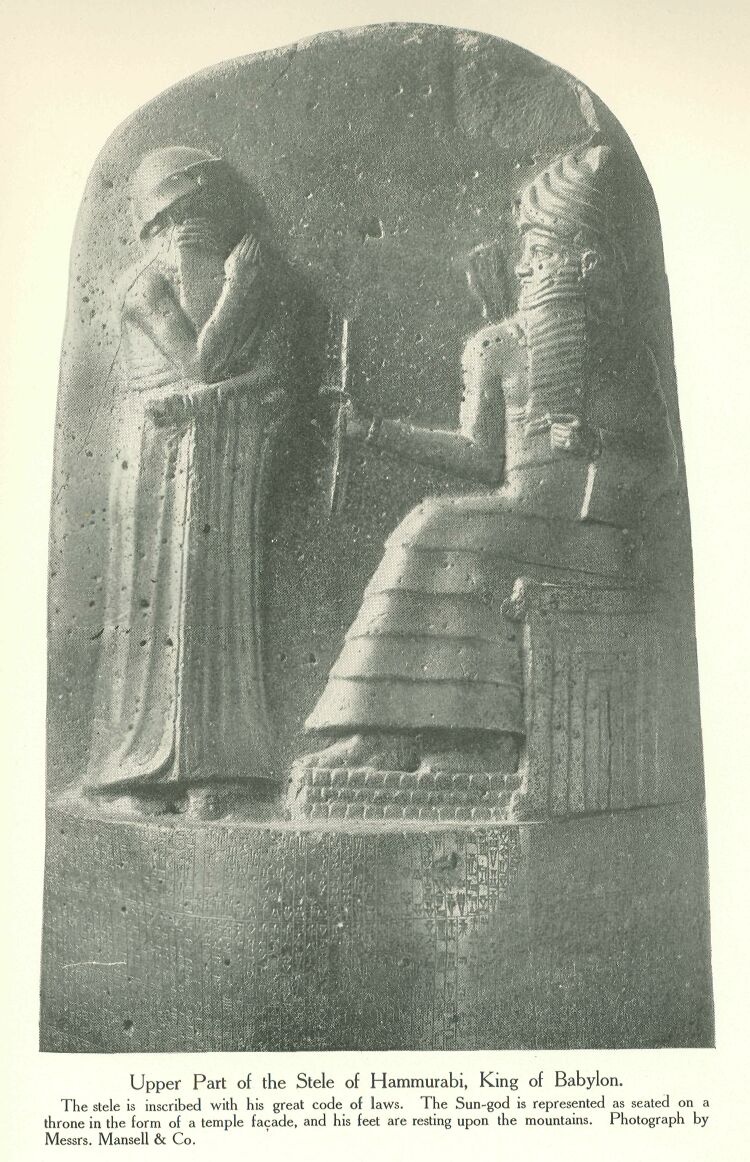
The Code of Hammurabi. This is a Babylonian law code that dates to somewhere around 1700 BCE. It consists of 282 laws, dealing with things from punishment for certain crimes (based on social status), contracts, liabilities, property, etc. On the upper part of the stone with the code, Hammurabi is standing in front of Shamesh, the Sun God, to receive the codes. As this picture shows with the three levels of rock beneath Shamesh's feet represent a mountain. So, as legend goes, Hammurabi receives the laws from the Sun God on the top of a mountain. Now doesn't that sound familiar. And consider that Hammurabi would predated any Moses figure (assuming Moses existed) by at least 500 years.
The Myth of Sargon. While their are many missing holes in this myth (most ancient myths that survive have such holes), the basic gist of the myth is that Sargon was born to a High Priestess (who are supposed to maintain their virginity), in secret, and then his mother set him in a basket and sent him floating down a river. From there, he was carried to the "drawer of water", Akki, who took Sargon in as his son and raised him. Again, this story has significant similarities with that of the story of Moses in the Bible, as well as differences. And it predates the Bible by even more than the Code of Hammurabi.
These are just two examples of a myriad of Ancient Near East myths that predate the period when the Old Testament books would have been written and share significant similarities with Old Testament stories. For me, to ignore this in favor of assuming the bible tradition as literal truth seems absurd, and borders on willful ignorance. If one looks at the bible as the story of a people, than the importance of its myths and stories are how it is different than the ones presented by other cultures at the time. But to do so, requires viewing it only as a source for potential spiritual truth, not historical or scientific truth, as I have discussed before.
In any event, these types of issues and conversations representation a continuing and growing frustration, and reminds me why I prefer philosophy as compared to theology. And just think, this is only after two weeks of the study, with thirty to go (only 14 on the Old Testament though, thankfully).


No comments:
Post a Comment